
Is One Piece political? (*Warning: Multiple spoilers ahead!)
Many fans of this sprawling pirate odyssey point out that it tackles deeply political themes: colonialism, corruption, slavery, censorship, and systemic abuse. And they’re right.
But does that make One Piece itself political? Does it mean the story is pushing a particular agenda?
Keep reading to find out why I—quite controversially, to my surprise—don’t think so. And why that’s exactly what makes it so powerful.
What Makes a Story Political?
A political story doesn’t just explore political themes. It takes a side. It promotes an ideology, frames certain groups as inherently righteous, and uses its characters as tools to push an agenda.
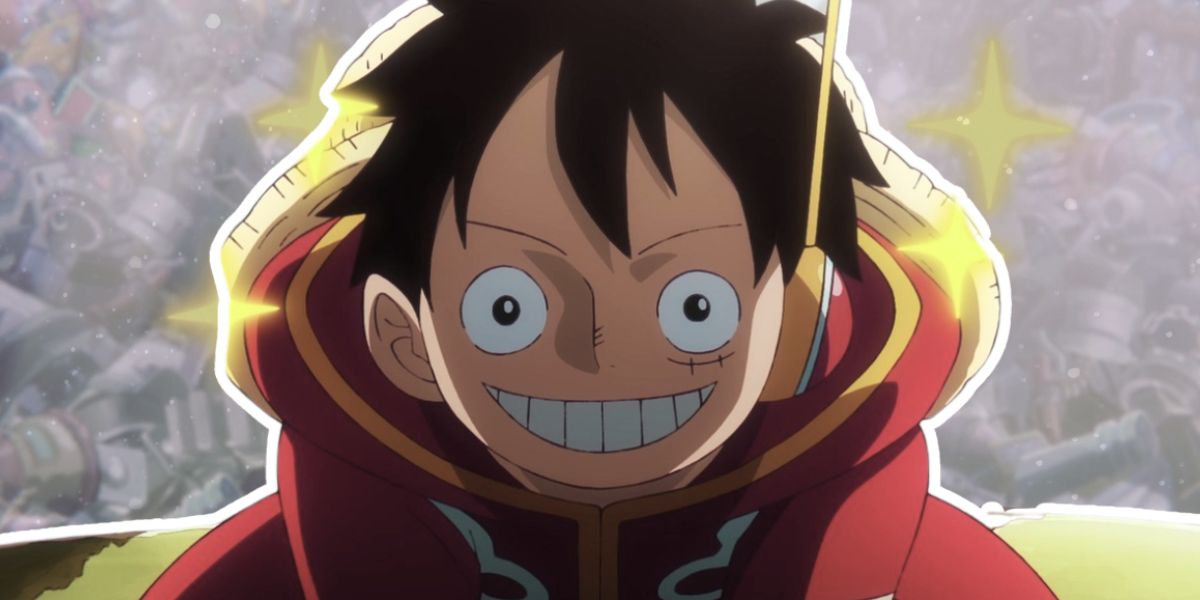
Luffy doesn’t do that.
Yes, he always protects his friends. But he doesn’t defend any group or system, including his own. He’s quick to call out crewmates when their actions go against what he believes is right.
He fought Zoro for supposedly harming civilians, and screamed at Usopp for almost spoiling the spirit of adventure. But it goes beyond his nakama. Luffy has rejected alliances, challenged respected pirates, and even punched would-be allies when they crossed his moral line.
He even teamed up with Smoker, a marine, in Punk Hazard—all to take down Caesar Clown, a fellow pirate.
Luffy operates on a personal code. His internal compass isn’t shaped by peer pressure, politics, or groupthink. One of the clearest signs of this? His father leads the Revolutionary Army, yet Luffy has shown zero interest in joining the cause.
And then there’s the biggest clue of all: Luffy has openly said he doesn’t want to be “anyone important.” He only wants to be Pirate King because, to him, that title belongs to the freest person alive.
Why Does this Matter?
In a world where everyone takes sides, Luffy stands out—not as a ruler, but as a free thinker.
He doesn’t gain power through affiliation, strategy, or ideology. He gains it by being someone no system can control. A selfish, instinctive, emotionally-driven “idiot” who somehow makes the right moral choice again and again—not because it’s popular, but because it feels right, and he wants to.
That’s not politics. That’s a personal philosophy.
And it’s the reason One Piece resonates far beyond its themes.
There’s a reason Luffy is the main character—not Dragon. In a black-and-white story, where the marines are evil and pirates are good, the Revolutionary Army would be front and center.
In One Piece, no side is inherently righteous or virtuous. Only those who follow their internal moral compass are. That’s the real revolution, and it’s one we almost never start in our world, either.
Why the Pushback?
When I say One Piece is philosophical, not political, I get tons of pushback, because popular thought leaders have already declared it 100% political. And many of those voices are deeply linked to the ideologies they promote.
We can admire those influencers. We can agree with them on many things. But knowing how to think precisely and independently is what separates a functional society from a broken one.
No, they aren’t entirely wrong. But the statement that One Piece is political is imprecise and incomplete. This story confronts political issues, but doesn’t preach politics. Quite the contrary. The main character does not operate through ideologies or affiliations, but through his own convictions and beliefs.
Knowing when something is right, even when it comes from the “wrong” side—and when something is wrong, even when it comes from the “right” one—is a skill we’ve nearly lost.
It’s also something Luffy lives by every day.
If there’s anything this story is really teaching us, it’s that moral clarity isn’t given, but chosen. Not once, but over and over again.
Moral clarity > political loyalty.
Values > policies.
Is One Piece a Manifesto Against Modern Politics?
I think One Piece isn’t just non-political—it’s a manifesto against ideological allegiance.
Again, why isn’t Dragon front and center in the story? Why do marines constantly question their own actions? Why are there righteous individuals on all sides? And why are even villains, at times, justified in their actions?
No side or group policy is promoted in One Piece. Instead, everyone’s actions are judged through the main character’s personal values. And why do his values resonate with ours?
It’s simple: Respect and freedom, when combined, are universally-accepted moral values.
And there’s a clear theme throughout the story: The only true path to freedom is independent thought and cutting ties to all ideologies.
What Would Luffy Do in Our World?
I recently saw a video of an influencer claiming that Luffy “would free Palestine.” On the surface, that frames him as a political figure. And I actually agree with the sentiment.
He very likely would, if only for a small payment of a few plates of meat. But that’s not because he’s political. It’s only because he’s deeply human.
Luffy believes in freedom, upholding it over all else. This is his philosophy. If someone’s rights are violated—no matter their group—he’ll defend them and take down their oppressors without hesitation.
But what happens when the oppressed become the oppressors?
What if, decades later, the pain and generational trauma once endured becomes the justification for enacting harm, on people who had no part in the original crime? This has proven to be a clear, common pattern throughout history.
That’s why a great story can never be political: It’s not about us vs. them, but about certain actions being wrong, no matter who they target.
This is where politically motivated characters often fall apart, and where Luffy doesn’t. He doesn’t take sides. Instead, he follows his own values.
His decisions aren’t shaped by history, ideology, or allegiance, but by one simple question:
“Is someone being stripped of their freedom right now?”
That’s why he always makes the right choice. He’s not politically informed, but morally aligned.
And this is what we’ve lost.
What’s happening in Palestine today is an abomination—an atrocity against human dignity that demands justice.
But I’ve already caught sight of the shadows of its aftermath: a growing global climate that quietly tolerates antisemitism, as though all Jewish people were collectively guilty for the acts of a government.
This is the danger of ideological thinking.
And it’s the opposite of what One Piece teaches.
What Would Luffy Think of Today’s Political System?
All movements or ideologies that oppress or censor others—political or otherwise—have eventually been condemned.
That’s why when Luffy steps in to oppose anything that strips someone’s freedom and autonomy, we cheer him on, often without rationalizing it in this way.
But if you look closely, it’s a pattern that runs throughout the entire story.
That’s why when Fujitora, Luffy’s enemy, praises him and longs to regain his sight (which he took himself) just to know what he looks like, it moves us. Still, he chose a side.
We connect with the backstories of Doflamingo, Big Mom, and Kaido because we understand why they became who they are. But that doesn’t justify what they’ve done.
Only characters like Sentomaru and Mjosgard, who totally abandon groupthink in favor of what they know is right, can become as free as Luffy. Still, it cost them everything.
So what would Luffy think of today’s political system?
He wouldn’t care who you voted for. He’d care whether you let that decision replace your conscience.
And he certainly wouldn’t ask what side you’re on. Instead, he’d wonder whether you would help the person standing in front of you.
How Does One Piece Tie Back to Our World?
Almost every character in One Piece (with the exception of literal demons) is not only morally complex, but deeply human.
And remember this: Every side in our own world is morally complex, and everyone who chooses a side has at least one great reason to do so. The difference is in knowing where you draw the line.
Do you have an internal moral compass you turn to when judging an action or policy, like Luffy does? Or do you follow your group’s ideologies, like the marine’s “Absolute Justice?”
If done so in earnest, this could be the most important question you ever answer.